• Home
  • About
  • International Relations
    • Journal Articles
    • Books
  • Journalism
    • Karya Jurnalistik
  • Commentary
  • Lecture
    • Politik Luar Negeri Indonesia
    • Pengantar Hubungan Internasional
    • Bahasa Inggris Diplomasi
  • Academic Profile

Jurnal Asep Setiawan

Jurnal Asep Setiawan

Tag Archives: indonesia

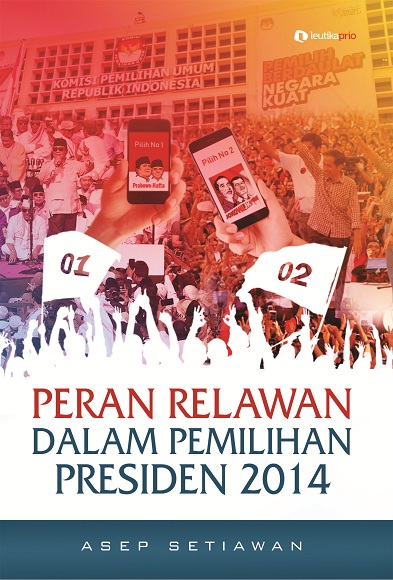
Peran Relawan dalam Pemilu 2014

06 Sunday Mar 2022

Posted by Setiawan in Books, politics

≈ Leave a comment

Tags

demokrasi, indonesia, pemilu, Pilpres, Relawan

Penulisan buku ini adalah untuk mengetahui peran relawan dalam pemenangan pasangan calon presiden dan calon wakil presiden tahun 2014 Joko Widodo dan Jusuf Kalla (Jokowi-JK). Dari kajian terungkap para relawan ini bergerak tanpa selalu dalam kendali formal struktural pendukung Jokowi-JK namun bergerak secara bebas dan dinamis dengan fokus memenangkan pasangan yang didukungnya. Dari kajian ini terungkap bahwa para relawan hadir karena figur Jokowi dianggap dapat dipercayai dan memberikan harapan. Relawan yang merupakan gerakan sosial ini sifatnya temporer namun sebagian dari relawan melakukan pendampingan sampai Jokowi menjadi presiden Relawan melakukan kampanye secara langsung di lapangan dan juga secara virtual. Selain berkampanye langsung para relawan juga melakukan pengawalan pada hasil pemilu sehingga penghitungan suara di tingkat tempat pemungutan suara dikawal sampai dengan Komisi Pemilihan Umum di Jakarta. Secara ringkat para relawan ini berperan memperkuat Kampanye Jokowi-JK, meningkatkan Kualitas Pilpres, memunculkan Harapan dan Solidaritas Politik Baru, mengawal Hasil Pilpres, alat Kontrol Pemerintah dan menjadi pijakan ke untuk meraih sejumlah jabatan di dalam pemerintahan.

http://www.leutikaprio.com/produk/110218/sosial_politik/22031965/peran_relawan_dalam__pemilihan_presiden_2014/11061570/asep_setiawan.

Share this:

  • Click to share on X (Opens in new window) X
  • Click to share on Facebook (Opens in new window) Facebook
  • Click to share on WhatsApp (Opens in new window) WhatsApp
  • Click to share on LinkedIn (Opens in new window) LinkedIn
  • Click to email a link to a friend (Opens in new window) Email
  • Click to print (Opens in new window) Print
Like Loading...

Buku Baru: Diplomasi Kesehatan Global Indonesia di era Pandemi COVID-19

01 Saturday May 2021

Posted by Setiawan in Hubungan Internasional, International Relations, Journal Article, Journal Articles, Research

≈ Leave a comment

Tags

covid-19, Diplomasi, indonesia, kesehatan, Pandemi

Buku ini masih dapat proses penyusuna yang menggambarkan bagaimana Indonesia melakukan diplomasi kesehatan pada satu tahun terakhir di era Pandemi Global COVID-19.

Pandemi Covid-19 telah menjadi isu kesehatan global karena mempengaruhi hampir semua negara di dunia pada tahun 2020. Pengaruh dari pandemi ini terutama terhadap kesehatan penduduk di sebuah negara. Banyak warga dari berbagai negara meninggal atau sakit karena terkena pandemi Covid-19 ini. Akibatnya, setiap pemerintah menyediakan fasilitas kesehatan termasuk para tenaga kesehatannya.

Pandemi Covid-19 telah menjadi isu global karena mewabah di seluruh dunia. WHO menetapkan Pandemi Covid-19 sebagai wabah dunia 11 Maret 2020 setelah muncul pertama kali di Wuhan, Provinsi Hubei Desember 2019. Data sampai Desember 2020 menunjukkan sudah 79,7 juta kasus dengan meninggal sempai 1,75 juta orang. Tingkat kesembuhan mencaai 44,9 juta orang. Sedangkan  Indonesia mengumumkan kasus positif Covid-19 pada 2 Maret 2020 dan pada pertengahan Desember terdapat 707.000 positif, sekitar 20.994 meninggal dan 577.000 sembuh.

Lebih dari itu pandemi telah mempengaruhi juga kinerja ekonomi sebuah negara karena ancaman Covid-19 menyebabkan lumpuhnya kegiatan ekonomi. Berbagai data menunjukkan bahwa pertumbuhan ekonomi negara di dunia menurun karena Covid-19 ini. Dengan demikian ancaman kesehatan global dari Pandemi ini memberikan dampak dari sisi kesehatan masyarakat dan juga kinerja ekonomi.

Dengan situasi seperti itu setiap negara, termasuk Indonesia, menghadapi ancaman Covid-19 baik dari sisi kesehatan dan ekonomi. Politik luar negeri menjadi salah satu instrumen dalam melindungi negara menghadapi ancaman pandemi. Dari sinilah tampak adanya hubungan antara isu kesehatan global yakni pandemi dengan politik luar negeri sebuah negara termasuk Indonesia dalam menghadapi pandemi.

Dalam Sidang Sidang ke-75 Majelis Umum Perserikatan Bangsa Bangsa yang digelar secara virtual, 23 September 2020 Presiden Joko Widodo menyatakan perlunya kerjasama agar semua negara mendapatkan akses setara terhadap vaksin yang aman dengan harga terjangkau. Ditambahkan bahwa vaksin akan menjadi game changer dalam perang melawan Covid-19.[1]

Menteri Luar Negeri Retno Marsudi menjelaskan Indonesia melakukan tiga refocusing prioritas kerja diplomasi Indonesia.[2] Fokus pertama adalah perlindungan terhadap WNI, fokus kedua adalah membantu pemerintah mengelola pandemi dari sisi kesehatan maupun dampak sosial ekonomi. Sedangkan fokus keiga adalah berkontribusi bagi perdamaian dan stabilitas dunia. Terkait dengan kontribusi terhadap stabilitas dunia, Menlu mengatakan, Indonesia bersama dengan 5 negara lainnya juga telah menginisiasi resolusi Majelis Umum PBB pertama mengenai COVID-19 yaitu ‘Global solidarity to fight the coronavirus disease 2019’.

Diplomasi kesehatan global Indonesia juga dilakukan melalui Badan Kesehatan Dunia atau World Health Organisation (WHO. Direktur Sosial-Budaya dan Organisasi Internasional Negara Berkembang Kementerian Luar Negeri Kamapradipta Isnomo menjelaskan, bahwa saat ini Indonesia telah menjadi anggota Executive Board WHO untuk periode 2017-2021.[3] Di WHO inilah Indonesia memberikan kontribusi kepada kesehatan global dengan mendukung tata kelola sharing of virus dan akses mendapatkan vaksin agar vaksin dapat dimanfaatkan oleh siapapun.

Diplomasi kesehatan ini juga dilakukan bersama Kementerian Kesehatan. Sekretaris Jenderal Kementerian Kesehatan Oscar Primadi mengatakan Indonesia melakukan sejumlah Memorandum of Understanding (MoU) Kerja Sama Kesehatan dari 3 MoU pada tahun 2016 menjadi 22 MoU dengan negara sahabat.[4] Sebagai tindak lanjut dari MoU, telah disusun Joint Action Plan (JAP), Plan of Action (PoA) dan dilaksanakannya Joint Working Group (JWG) serta berbagai program implementasi.


[1] Genjot Diplomasi demi Vaksin Covid-19.https://indonesia.go.id/narasi/indonesia-dalam-angka/ekonomi/genjot-diplomasi-demi-vaksin-covid-19. Diakses 27 Desember 2020.

[2]Diplomasi Masa Pandemi, Menlu Lakukan 3 Refocusing Prioritas Kerja. https://news.detik.com/berita/d-5226797/diplomasi-masa-pandemi-menlu-lakukan-3-refocusing-prioritas-kerja. Diakses 27 Desember 2020.

[3]Lawan Pandemik Covid-19 Melalui Diplomasi Kesehatan Global. https://mediaindonesia.com/humaniora/313543/lawan-pandemik-covid-19-melalui-diplomasi-kesehatan-global. Diakses 26 Desember 2020.

[4]Kemenkes Harus Siap Jalani Diplomasi Kesehatan di Era New Normal. https://www.kemkes.go.id/article/print/20070200002/kemenkes-harus-siap-jalani-diplomasi-kesehatan-di-era-new-normal.html. Diakses 27 Desember 2020.

Share this:

  • Click to share on X (Opens in new window) X
  • Click to share on Facebook (Opens in new window) Facebook
  • Click to share on WhatsApp (Opens in new window) WhatsApp
  • Click to share on LinkedIn (Opens in new window) LinkedIn
  • Click to email a link to a friend (Opens in new window) Email
  • Click to print (Opens in new window) Print
Like Loading...

Understanding Indonesian Terrorism: Global Dynamics and Local Impact

02 Friday Apr 2021

Posted by Setiawan in Commentary, Hubungan Internasional, Journal Articles

≈ Leave a comment

Tags

indonesia, terrorism

Suicide bomber attack on a church in Makassar, South Sulawesi on March marks the existence of terrorism movement in Indonesia. This attack show that terror group remain active in whole area of the nation. The involvement a female in latest attack added significant mark on this tragedy.

In addition, following attack to police headquarter in Jakarta on March was evident on the force of terrorism in Indonesia. Even though terror action in Indonesian capital caused no victim other than female attacker, the incident made nation shaken. This attack symbolizes of the power of terrorist groups.

The article analyses international factor in terrorist movement in the country. Firstly, impact of Islamic radical ideology in Indonesian terrorist group. Secondly, the role of digital platform including media social on strength of terrorist group. Thirdly, impact of international terrorist organization on local movement. 


Impact of Radical Islamic Ideology

The spread of radical Islamic ideologies from abroad has significantly influenced terrorist groups in Indonesia. Wahhabism and Salafism, originating from the Middle East, have played a crucial role in shaping the extremist mindset of Indonesian terrorist organizations. These ideologies promote a strict, literalist interpretation of Islam and often justify violence against those deemed as enemies of the faith.Jemaah Islamiyah (JI), one of Indonesia’s most notorious terrorist groups, exemplifies this influence. JI’s leaders, Abu Bakar Bashir and Abdullah Sungkar, promoted a version of Islam heavily influenced by groups like al-Qaeda.

They argued that Muslims must apply Islamic principles to all areas of life, including government, and advocated for the forcible imposition of sharia law through violence.The impact of these imported ideologies is evident in JI’s goals and methods. The group sought to establish an Islamic state in Indonesia and implement sharia, mirroring the objectives of international jihadist movements. This ideological alignment facilitated connections between Indonesian extremists and global terrorist networks, particularly al-Qaeda.

The Role of Digital Platforms and Social Media

The advent of digital technologies and social media has provided terrorist groups with powerful tools for recruitment, propaganda dissemination, and operational planning. Indonesian extremist groups have leveraged these platforms to expand their reach and influence, particularly among the youth.Social media has become an “incubator” for youth terrorism in Indonesia.

Terrorist groups use these platforms to provide anxiety narratives and offer roles for teenagers to contribute through the path of jihad. The characteristics of adolescents, who are often seeking self-value and are highly engaged with social media, make them particularly vulnerable to online radicalization.

The Islamic State (IS) demonstrated the potency of social media as a tool for terrorist recruitment and propaganda. When IS declared a caliphate in 2014, it had a significant impact on Indonesian jihadist networks. Over a thousand Indonesians attempted to travel to Syria and Iraq, while those who couldn’t were encouraged to stage operations at home. This online-driven resurgence led to a series of IS-inspired attacks in Indonesia from 2016 onwards.

Impact of International Terrorist Organizations

International terrorist organizations have played a significant role in shaping and supporting local movements in Indonesia. Al-Qaeda, in particular, has had a lasting impact on the country’s terrorist landscape.For more than a decade, Al-Qaeda penetrated the region by establishing local cells, training Southeast Asians in its camps in Afghanistan, and financing and cooperating with indigenous radical Islamist groups. This support provided Indonesian terrorists with training, resources, and a global network.Jemaah Islamiyah, often described as a “mini-Al-Qaeda,” emerged as a semi-autonomous regional arm of Al-Qaeda. This relationship facilitated the transfer of tactics, techniques, and ideologies. JI members received training in Al-Qaeda camps and adopted the organization’s focus on attacking Western targets.

The influence of international terrorist groups extends beyond operational support. The success of groups like the Taliban can provide psychological boosts to local extremists. The recent Taliban takeover in Afghanistan, for instance, appears to have sent a psychological boost to militant groups in Indonesia during a period of downturn

In conclusion, while Indonesian terrorist movements have deep indigenous roots, international factors have significantly shaped their ideology, methods, and organizational structures. The interplay between global radical ideologies, modern communication technologies, and transnational terrorist networks has created a complex and evolving threat landscape in Indonesia. Addressing this threat requires a nuanced understanding of both local contexts and global dynamics.

References:


Fealy, G. (2004). Islamic radicalism in Indonesia: The faltering revival? Southeast Asian Affairs, 104-121.

Institute for Policy Analysis of Conflict. (2017). The evolution of ISIS in Indonesia. IPAC Report No. 39.

Jones, S. E. (2018). Terrorism in Indonesia: An overview. Brookings Institution.

Nuraniyah, N. (2019). The evolution of online violent extremism in Indonesia and the Philippines. Global Research Network on Terrorism and Technology: Paper No. 5. Royal United Services Institute for Defence and Security Studies.

Ramakrishna, K. (2009). Radical pathways: Understanding Muslim radicalization in Indonesia. Praeger Security International.

Schulze, K. E. (2002). Laskar Jihad and the conflict in Ambon. The Brown Journal of World Affairs, 9(1), 57-69.

Solahudin. (2013). The roots of terrorism in Indonesia: From Darul Islam to Jema’ah Islamiyah. Cornell University Press.

Stickler, J. (2017). Jemaah Islamiyah: Lessons from combatting Islamist terrorism in Indonesia. Naval Postgraduate School.

Taufiqurrohman, M. (2015). The road to ISIS: How Indonesian jihadists travel to Syria and Iraq. Counter Terrorist Trends and Analyses, 7(4), 17-25.

United States Congressional Research Service. (2009). Terrorism in Southeast Asia. Library of Congress.



Share this:

  • Click to share on X (Opens in new window) X
  • Click to share on Facebook (Opens in new window) Facebook
  • Click to share on WhatsApp (Opens in new window) WhatsApp
  • Click to share on LinkedIn (Opens in new window) LinkedIn
  • Click to email a link to a friend (Opens in new window) Email
  • Click to print (Opens in new window) Print
Like Loading...
← Older posts
Newer posts →

Recent Posts

  • Bencana Alam di Sumatera: Pemicu dan Solusi Berkelanjutan
  • Statecraft 3.0: AI dan Masa Depan Diplomasi
  • Perang Dagang Amerika-China 2025: Analisis Implikasi terhadap Ekonomi Asia Tenggara
  • Strategi Palestina Pasca Pengakuan Internasional
  • Perjuangan Palestina: Dari Pengakuan ke Kedaulatan Efektif

Archives

Categories

My Tweets

Pages

  • About
  • Academic Profile
  • Bahasa Inggris Diplomasi
  • Karya Jurnalistik
  • My Books
  • Pengantar Hubungan Internasional
  • Politik Luar Negeri Indonesia

Create a website or blog at WordPress.com

  • Subscribe Subscribed
    • Jurnal Asep Setiawan
    • Already have a WordPress.com account? Log in now.
    • Jurnal Asep Setiawan
    • Subscribe Subscribed
    • Sign up
    • Log in
    • Report this content
    • View site in Reader
    • Manage subscriptions
    • Collapse this bar
 

Loading Comments...
 

    %d